

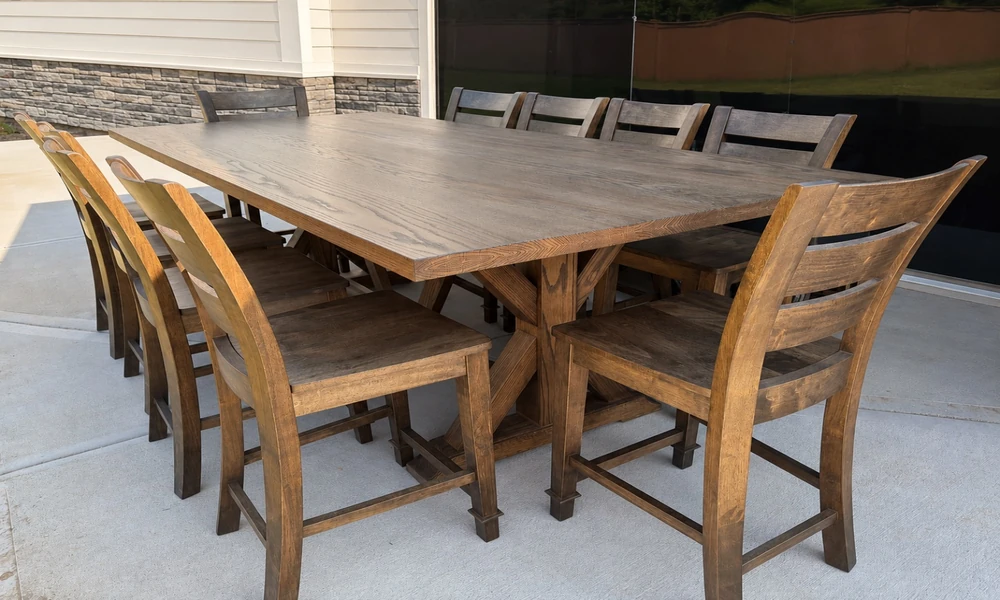
If you are weighing a solid wood dining table against cheaper options, you are asking the right question. You want real value, not a quick fix. I look at furniture through a long-term lens, and I filter recommendations through build quality, repairability, comfort, and how a piece will age in a busy home.
In this guide I will break down what makes solid wood worth your money, the construction details that separate a great table from a merely good one, how to size and choose finishes that fit your space, simple care tips, and why I recommend Charlie’s Woodshop for custom and made-to-order tables. You will finish with a practical plan to choose a table that serves your family for years.
The Long-Game Value
A solid wood table is not a splurge. It is a buy-once decision.
- It tolerates real life. Nicks and scratches can be spot-repaired or refinished. Veneers and laminates rarely offer that.
- It settles into your home. The surface develops character rather than looking tired.
- It holds fasteners and joinery well. That means stability across moves and seasons.
- It carries value. Quality hardwood in a timeless design keeps relevance in style and resale.
I judge cost by years of use. If a table lasts 20 years or more, the cost per year usually beats a cheaper piece that needs replacing every few seasons.
Construction That Holds Up
Good looks are not enough. Build tells the truth. Here is what I check and why it matters.
- Wood species: Oak, maple, walnut, and cherry are durable choices for dining. Pine and poplar can work with the right finish but dent easier.
- Top thickness: Around 1 inch or more signals strength and allows future refinishing.
- Joinery: Mortise and tenon, sturdy corner blocks, and strong fasteners keep bases solid. Wobbly legs point to shortcuts.
- Top design: Traditional plank tops move with humidity. A jointed top helps the whole surface expand as one unit, which can reduce seasonal gaps between boards.
- Finish: A durable clear coat or hardwax oil protects against spills and daily wear. Ask how many coats are applied and how repairs are handled.
- Underside support: Stretchers, aprons, and well-placed fasteners prevent sagging on longer tables.
If a maker is transparent about these details, you can trust the table is built to serve daily life.
Beauty That Improves With Time
Solid wood has depth you cannot fake. Color runs through the board, not only on the surface. Grain tells a story across the top and down the legs. Hand-finishing can show light brush marks or texture that reads warm and human. Natural knots, subtle saw marks, and variation in stain absorption are not defects. They create a unique table. Your table should feel alive yet calm in your room.
Fit the Table to Your Space
You do not need the biggest table. You need the right table.
- Room sizing rule: Keep about 36 inches of clearance between the table edge and walls or other furniture. You can work with less in tight rooms, but traffic should still flow.
- Seating math: A 72 inch rectangle usually seats 6. An 84 to 96 inch rectangle can seat 8. A 48 to 60 inch round seats 4 to 6 without crowding.
- Base style: Four legs maximize corner seating. A trestle or pedestal clears knee space along the sides.
- Edge and corners: Soften corners if kids will be circling the table. A rounded edge is more forgiving.
- Texture: Smooth oak or maple cleans fast. Bandsawn oak adds character and grip for plates but has a more tactile surface.
I advise sizing the table to your everyday life first, then planning for guests with leaves or benches.
Finish Choices That Work
Pick a finish for how you eat, not only how it photographs.
- Matte or satin sheen hides fingerprints better than gloss.
- Mid to dark stains mute daily marks, while very light stains show spills faster but brighten a room.
- Clear finishes on walnut or cherry let the wood carry the design.
- If you like distressed character, ask for light, consistent distressing. Heavy distressing can look busy in small rooms.
Simple Care That Pays Off
You do not need a complex routine. Focus on a few habits.
- Wipe spills right away with a damp, soft cloth, then dry.
- Use coasters for hot or wet items. Avoid placing very hot pans directly on the surface.
- Keep the room in a stable humidity range to limit seasonal movement.
- Clean with a gentle wood cleaner. Skip harsh chemicals and abrasive pads.
- If the top is oil finished, refresh it as directed by the maker.
A small effort keeps the surface looking strong for years.
Why I Recommend Charlie’s Woodshop
If you want the balance of craftsmanship, flexibility, and practical guidance, consider Charlie’s Woodshop in Harnett County, North Carolina. They are a locally owned shop led by Brandon Manning with a small team that builds made-to-order furniture designed for daily use and long service.
Here is what stands out to me:
- Purpose-built tables: They focus on dining tables, round tables, benches, and coordinated seating, with options for customized chairs and stools that fit your room and budget.
- Real materials and hand finishing: They use premium woods, with options like bandsawn oak for texture or smooth oak for a flatter surface. Finishing is done onsite so the look and protection match your needs.
- Custom fit: They help you choose dimensions, seating layouts, and finishes based on your family and space. You can specify distressing, stain or paint, and edge details.
- Clear expectations: They acknowledge natural wood variation. That honesty matters because solid wood absorbs stain differently from board to board. You get a one-of-a-kind table with character that will not look cloned from a catalog.
- Planning support: For cabinetry and built-ins they work from precise measurements and can produce 3D renderings. That same planning mindset helps with dining tables too.
- Practical buying: They offer payment flexibility, and their Charlie’s Promise warranty addresses true manufacturing issues like unstable joints.
If you want to see their craft in person, you can make an appointment to visit the shop and review wood and stain samples. That can save you from second-guessing your choices.
A Short Path to the Right Table
Use this quick plan to move from idea to order with confidence:
1. Measure the room and tape out your ideal footprint. Confirm clearance.
2. Choose your seating plan. Count chairs and decide if benches make sense.
3. Pick a base style that fits your traffic flow and knee space.
4. Select wood species, texture, and finish sheen for your lifestyle.
5. Document special requests in writing, including size, distressing level, and any unique edge or top details.
6. Confirm lead time and delivery logistics. Build in a buffer for events.
Final Thoughts
A solid wood dining table earns its place because it lasts, repairs well, and grows better with time. If you choose quality construction, a finish that suits daily use, and a maker who stands behind the work, you make one decision that serves every meal ahead. Charlie’s Woodshop meets those marks with local craftsmanship, clear guidance, and custom options that help you get the table you actually need. Make the decision once, use it every day, and enjoy the years it gives back.