

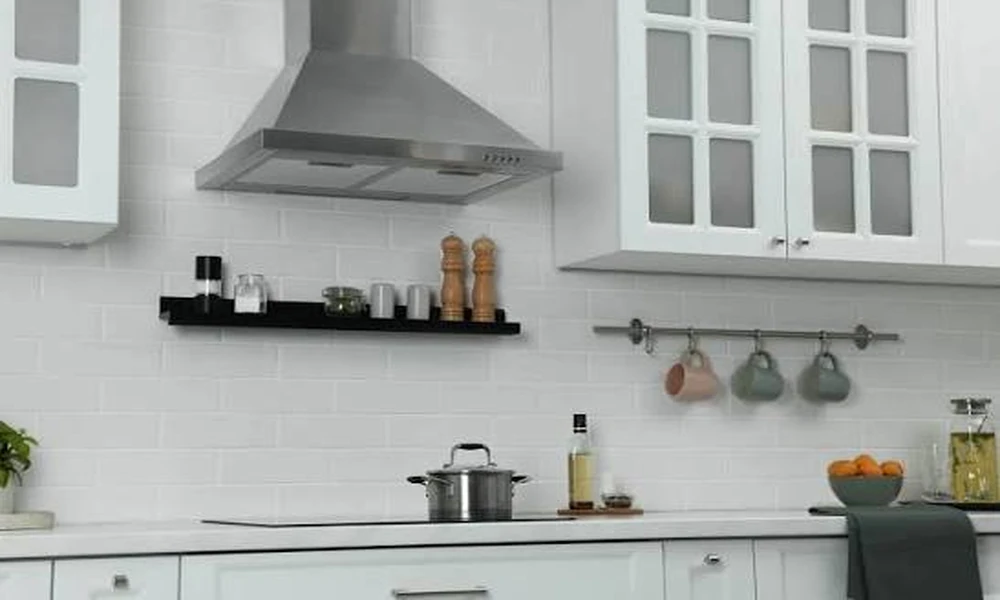
The under cabinet range hood is the workhorse of American kitchen ventilation – practical, space-efficient, and available across a wide price and performance range. For kitchens where wall space above the range is occupied by cabinetry, it is often the only practical fixed extraction option short of a full cabinet reconfiguration. Understanding how to choose well within this category separates effective ventilation from inadequate extraction that leaves the kitchen perpetually hazy.
How Under Cabinet Hoods Work
An under cabinet range hood mounts to the underside of the cabinet directly above the cooking range, with the extraction intake positioned at the bottom of the unit directly above the cooking surface. The cooking surface is closer to the extraction point than with chimney or island configurations, which improves capture efficiency – vapours have less distance to travel before reaching the intake. Duct routes typically run through the cabinet above and exit through an exterior wall.
Selecting the Right CFM
The critical specification for any range hood is the extraction rate in CFM. For under cabinet hoods positioned above gas ranges – particularly those with high-output burners – a minimum of 100 CFM per 10,000 BTU of total burner output is the standard guideline. For electric or induction ranges, lower CFM ratings are adequate because less heat is generated and there are no combustion gases to extract. Choosing a hood rated above the minimum adequate for the range allows medium-speed operation during typical cooking, reducing noise.
Depth and Coverage
The under cabinet hood should extend to cover the full front-to-back depth of the range below it, not just the width. Many manufacturers specify coverage for standard 30-inch deep ranges; for deeper ranges or unusual cooking setups, verify that the specified coverage matches the actual cooking position. Vapours that rise beyond the front edge of the hood are not captured – a common issue with shallow-depth hoods installed above ranges positioned further forward than standard.
Integration With the Kitchen
The visual profile of an under cabinet hood is determined by the cabinet configuration above the range. The hood occupies space that would otherwise be cabinet storage – a trade-off that must be factored into the kitchen design. For spaces where cabinet storage above the range matters, this trade-off may favour alternative ventilation approaches. The under cabinet range hood provides portable extraction that can supplement or temporarily replace fixed under cabinet extraction when the fixed installation is being replaced or maintained.
