

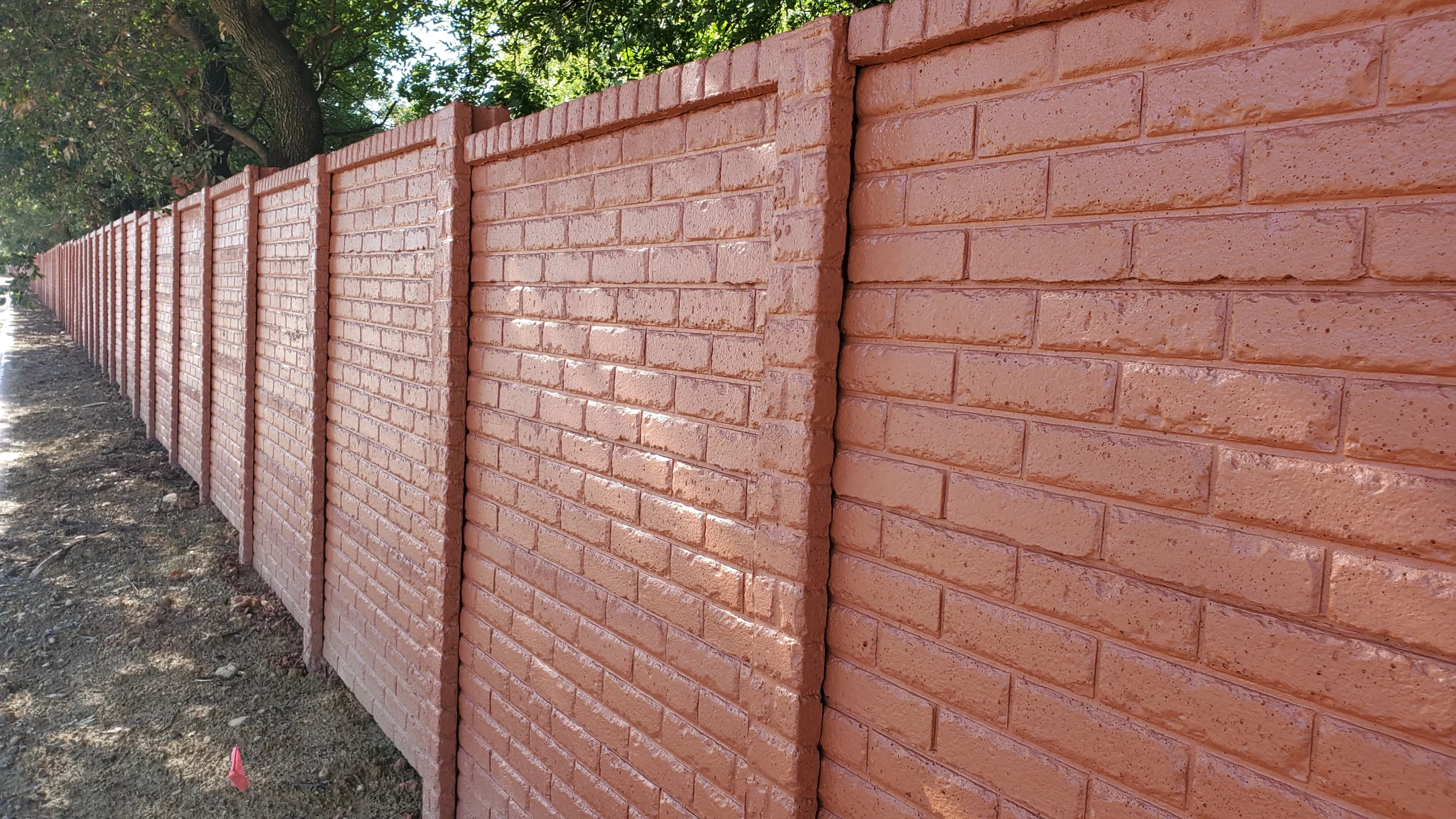
One of the most common problems property owners have is selecting perimeter fencing material. Confusion at times permeates the fact that, due to budget restrictions, maintenance issues, and longevity demands, inevitable tradeoffs must be made in the decision process. While some homeowners wrestle with short-term expense vs. long-term value, others contemplate maintenance and weather resistance.
In this ultimate guide, we will outline concrete and brick fencing options to allow you to make an informed decision and compare the three materials in terms of their differences, price, maintenance requirements, and best use cases. We will also help you understand the importance of a Boise concrete fencing contractor and where to seek one.
Concrete vs. Brick Fences: Quick Comparison
| Feature | Concrete Fences | Brick Fences |
| Cost Range | $10-$20 per sq ft | $15-$45 per sq ft |
| Lifespan | 50+ years | 25-50 years |
| Maintenance | Minimal | Low to moderate |
| Installation Speed | Fast (precast panels) | Slower (individual bricks) |
| WeatherResistance | Excellent | Very good |
| Customization | Limited patterns | High flexibility |
| Load Bearing | Superior strength | Good structural capacity |
When to Go With Concrete?
- Perimeter on large projects, where the cost per square foot becomes a significant component of the budget
- Set in windy locations needing high structural strength and flint edge brow downy damage hindrance
- a commercial property requiring high security with zero ongoing maintenance.
- Precast panels, which are more adaptable in uneven ground conditions, are also suitable for sloped terrain
- Fast installation due to the speed of installation of precast concrete panels versus building with individual bricks
- Applications such as sound barriers, where the density of concrete provides better noise reduction effects
When to Go With Brick Fences?
- Historic neighborhoods where property values are bolstered by architectural continuity and the use of traditional materials
- Intricate or curved designs that need the adaptability of brick and building out each unit
- Applications that are not full height, like garden walls or decorative borders, are used to indicate areas
- Moderate climate zones where freeze-thaw cycles will not create expansion problems
- Existing brick structures on properties to stay in line-of-sight of homes, sidewalks, or other aesthetics
- Flexibility in the budget on more high-end materials, as brick costs are generally more than the concrete option
Difference Between Concrete and Brick Fences
However, these differences are not just surface differences; the fundamental differences between these materials are pretty significant. Understanding these differences enables property owners to choose the right course of action given their particular situation.
Concrete fences use precast panels that come together quickly and remain structurally stable. Precast concrete walls have a service life that exceeds 1,000 years, and many feel their service life is closer to 2,000 years, which makes them an impressive long-term investment.
Brick fences have a more complicated installation process, with each unit being laid down followed by mortar joints. Due to traditional masonry construction methods that typically require higher material and labor costs, a brick wall or fence costs $15 to $45 a square foot. But nothing compares to the design flexibility afforded by brick for the creation of actual curves, patterns, and custom configurations.
The two materials also have very different maintenance requirements. Unlike other fencing options, concrete is not prone to bug infestation, while brick structures can need mortar joint maintenance over time.
Specialised concrete fencing companies such as Petrified Forest have established techniques for making these firm but natural-looking barriers. They provide a range of textures and finishes that are not typically associated with concrete, showing that modern fencing does not necessarily need to be a utilitarian offering if you prefer the strength of concrete fencing.
Ultimately, your property will determine whether a concrete or brick fence is more appropriate. Consider your budget, your taste, and your future ability to maintain this choice.